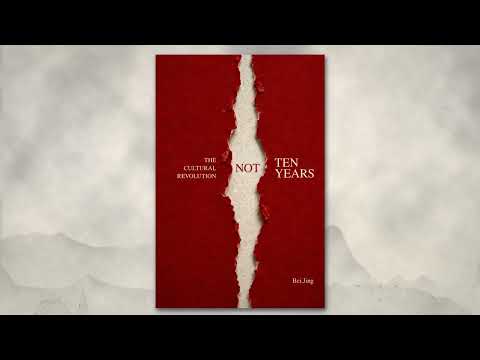
A question
Was the Cultural Revolutionreally only ten years long?
1966 to 1976 is the familiar frame. But a political movement that transformed the lives of hundreds of millions of people did not suddenly appear on a single day, nor did everything it created disappear when a date on the calendar changed.
1966–1976: the familiar “ten years”
But it did not come from nowhere
nor did it end with a date
Today, many people around the world still see the Cultural Revolution as a closed chapter of Chinese history, or as a communist tragedy that has nothing to do with them.
But the problems it revealed do not belong to one ideology, or to one country.
- When power is no longer restrained,
- when a leader is made into an infallible embodiment of truth,
- when political loyalty begins to override facts,
- when some people are defined as “non-persons”, unworthy of decent treatment,
any society can, step by step, cross lines it once believed could never be crossed.
Only by understanding how a catastrophe takes shape, and how it operates, can we hope to recognize the next one before it begins.
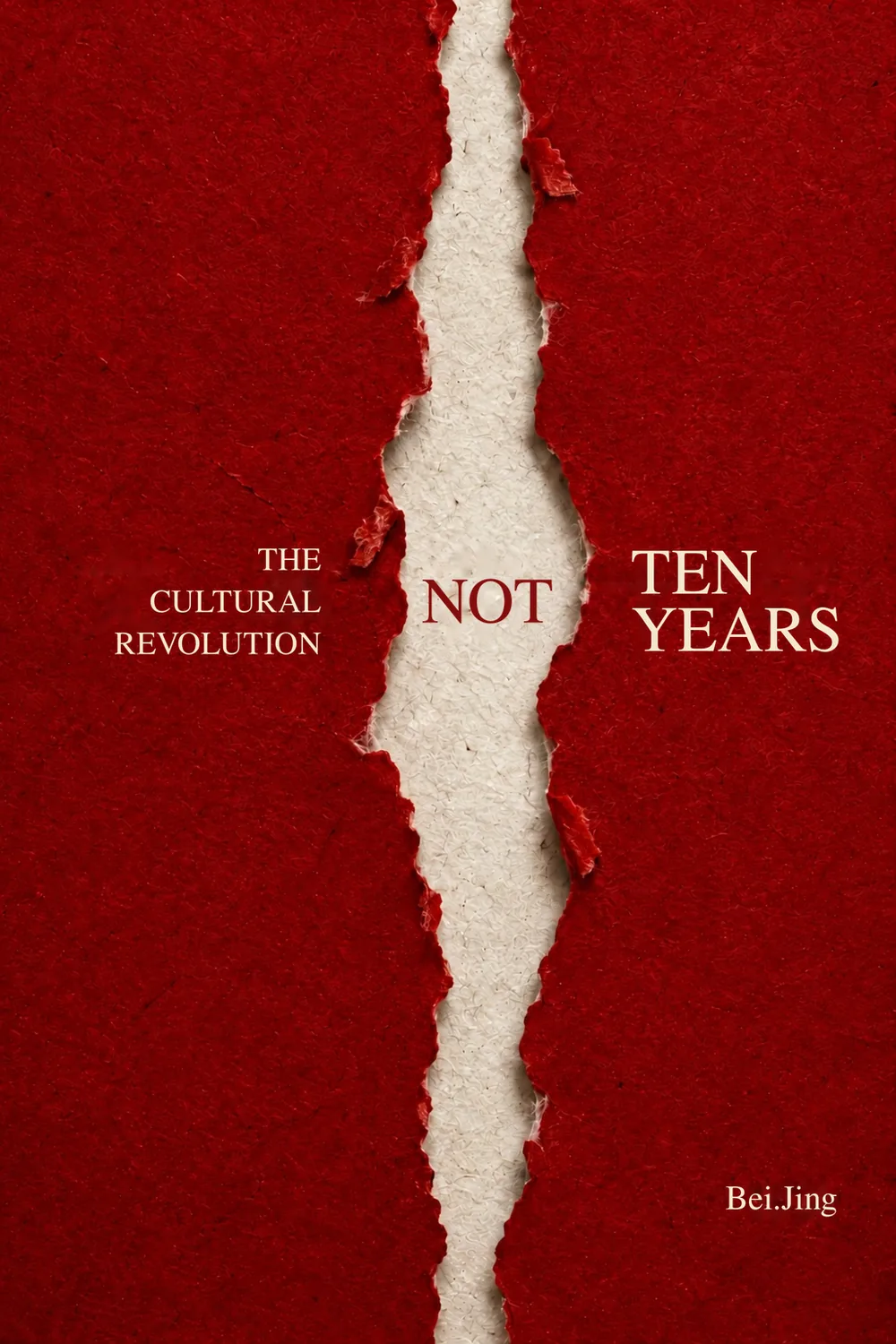
The Book
How did a revolutionlike this become possible?
Not Ten Years grows out of Bei.Jing’s twenty-eight-part lecture series, “Bei.Jing on the Cultural Revolution” — but it is not a transcript.
The lecturesWHENWHAT
The bookWHYHOW
The lectures mostly answer when the Cultural Revolution happened and what happened. The book goes further: why did it happen, and how, step by step, did it become possible?
Published in several languages, it hopes to help readers from different cultures ask whether what we live through today, and what we will face tomorrow, is a returning “Cultural Revolution 2.0” — or whether the Cultural Revolution never truly ended.
From Yan’an Rectification to big-character posters, Red Guards, military control and everyday survival —
the book reconnects histories that are often told separately.
What the book asks
Not Ten Years is concerned not only with who launched the Cultural Revolution or who suffered under it. It also examines how political power entered language, how language divided people into new categories, how institutions lost their ability to protect those inside them, and how ordinary people tried to survive in a world where the rules themselves could suddenly change.
History does not take place only inside Zhongnanhai.
It unfolds in schools, factories, homes and streets — and sometimes on the front door of an ordinary person.
A slogan could change someone’s political identity.
A poster could alter the fate of an entire family.
A new political vocabulary could make the unimaginable appear legitimate.
Lecture series · 公開課
Twenty-eight lectures
Bei.Jing’s public lecture series in twenty-eight parts (in Chinese), on the YouTube channel @BeiJing_Talking.
Animated series · 動畫
Thirty chapters, thirty episodes.
The book’s thirty chapters will be adapted, one by one, into a thirty-episode animated series, in English and in Chinese.
Seven languages
One question,seven languages.
Not Ten Years will be published in Traditional Chinese, English, Spanish, French, German, Japanese and Korean.
English
Not Ten Years: The Cultural Revolution
Coming soon
This book does not offer a simple answer to the Cultural Revolution.
It reopens questions too oftencompressed into the phrase“the ten-year Cultural Revolution.”
The Cultural Revolution may have a conventional chronology.
Its origins, mechanisms, consequences, and afterlives were never so neatly contained.
Coming Soon即將出版